



Top 10 Must-See Animals on a Kenyan Safari
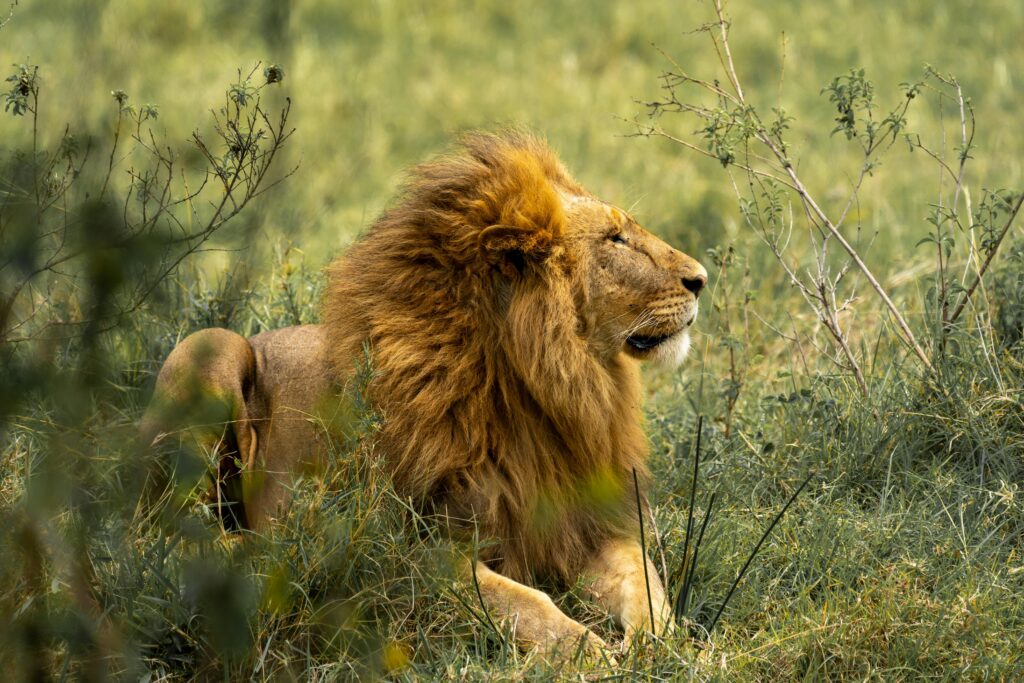
African Lion – Witness the King of the Savannah in Action
The thunderous roar that echoes across Kenya’s plains at dawn belongs to Africa’s most iconic predator. Lions command respect wherever they roam, and Kenya’s national parks offer some of the continent’s best opportunities to observe these magnificent cats in their natural domain. The Maasai Mara stands as the crown jewel for lion encounters, where multiple prides roam the expansive grasslands.
Male lions, with their impressive manes ranging from golden blonde to deep black, serve as the pride’s protectors and symbols of raw power. Females handle most hunting duties, working together with tactical precision to bring down prey. Watching a coordinated hunt unfold reveals the intelligence and social complexity that makes lions unique among big cats.
Peak viewing times occur during early morning and late afternoon when lions emerge from their midday rest. The golden light of these hours creates perfect photography conditions while lions engage in social behaviors like grooming, playing, and territorial displays. Kenya’s lion population faces conservation challenges, making each sighting precious and meaningful for wildlife preservation efforts.
African Elephant – Experience Gentle Giants in Their Natural Habitat
Kenya hosts two distinct elephant species: the larger bush elephants and the smaller forest elephants found in select regions. These intelligent giants create unforgettable safari moments as they demonstrate complex social behaviors and family bonds that mirror human relationships in many ways.
Amboseli National Park provides unparalleled elephant experiences against the backdrop of Mount Kilimanjaro. Here, massive herds gather at seasonal swamps and watering holes, creating spectacular viewing opportunities. Matriarchal societies lead these groups, with the oldest and wisest female guiding her extended family across vast territories they’ve memorized over decades.
Elephant intelligence shines through their problem-solving abilities, tool use, and emotional depth. Visitors witness mourning rituals, playful interactions between calves, and protective behaviors that showcase their remarkable cognitive abilities. Baby elephants provide endless entertainment as they learn essential survival skills while staying close to their mothers’ protective shadows.
Tsavo East and West National Parks offer different elephant experiences, where red-dust-covered herds traverse ancient migration routes. These parks host some of Africa’s largest elephant populations, providing excellent opportunities to observe natural behaviors away from human interference.
Cape Buffalo – Encounter Africa’s Most Unpredictable Beast
Often underestimated by safari newcomers, Cape buffalo earned their fearsome reputation through sheer unpredictability and defensive capabilities that rival any African predator. These massive bovines travel in herds ranging from small bachelor groups to gatherings of thousands, creating impressive wildlife spectacles across Kenya’s diverse ecosystems.
Buffalo demonstrate remarkable intelligence and memory, particularly when threatened. They coordinate group defenses against predators, often forming protective circles around vulnerable herd members. Old bulls, known as “dagga boys,” become increasingly solitary and temperamental with age, making them particularly dangerous encounters for both wildlife and humans.
Kenya’s buffalo populations thrive in varied habitats from the Maasai Mara’s open grasslands to the dense forests of Mount Kenya. Their adaptability allows them to flourish where other large mammals struggle. During dry seasons, buffalo concentrate around permanent water sources, providing predictable viewing opportunities for safari visitors.
The relationship between buffalo and cattle egrets creates fascinating wildlife interactions. These small white birds ride on buffalo backs, feeding on insects disturbed by their movement while serving as early warning systems for approaching danger. This symbiotic relationship exemplifies the interconnected nature of African ecosystems.
Black Rhinoceros – Spot These Critically Endangered Powerhouses
Black rhinos represent one of Africa’s greatest conservation success stories and ongoing challenges. Kenya’s rhino sanctuaries and conservancies provide safe havens for these critically endangered giants, offering visitors rare opportunities to witness animals that once faced near extinction.
Ol Pejeta Conservancy stands as Kenya’s premier rhino destination, hosting the largest black rhino population in East Africa. Here, intensive protection measures and breeding programs work toward species recovery. The conservancy’s anti-poaching efforts and community involvement create sustainable conservation models that benefit both wildlife and local populations.
Black rhinos display surprisingly agile movement despite their massive size, capable of reaching speeds up to 35 miles per hour when charging. Their excellent hearing and sense of smell compensate for poor eyesight, making them formidable despite their perceived clumsiness. Solitary by nature, except during mating season, they establish territories marked by dung piles and urine spraying.
Nairobi National Park offers unique rhino viewing experiences within sight of Kenya’s capital city. This proximity demonstrates how conservation efforts can succeed even in densely populated areas. The park’s rhino sanctuary program has contributed significantly to population recovery efforts across Kenya.
African Leopard – Track the Most Elusive Big Cat
Leopards embody the mystique of African wilderness through their secretive nature and incredible adaptability. These solitary cats master the art of camouflage, making every sighting a special achievement for safari enthusiasts. Kenya’s diverse landscapes provide ideal leopard habitat, from rocky outcrops to dense riverine forests.
The Maasai Mara’s leopard population includes several famous individuals known to guides and researchers. These cats demonstrate remarkable climbing abilities, often hoisting prey twice their weight into tree branches to protect meals from scavengers. Their distinctive rosette patterns create natural camouflage that makes spotting them challenging even for experienced guides.
Leopards adapt to various prey species depending on habitat and availability. They hunt everything from small antelope to birds, fish, and even young ostriches. This dietary flexibility allows leopards to thrive in environments where other large predators struggle to find sufficient food sources.
Night drives in private conservancies offer the best leopard viewing opportunities, as these cats become most active after dark. Their haunting calls echo across the savannah, serving as territorial announcements and mating communications. Patience and skilled tracking often reward visitors with intimate behavioral observations impossible to witness with other big cats.
Magnificent Predators Beyond the Big Five
Cheetah – Watch the World’s Fastest Land Animal Hunt
The golden spotted blur racing across Kenya’s grasslands at 70 mph represents one of nature’s most spectacular predators. Cheetahs embody pure speed and precision, making them absolutely mesmerizing to watch during a safari. Unlike other big cats that rely on power and stealth, cheetahs have evolved into the ultimate sprinting machine.
Their hunting strategy is pure theater. A cheetah will carefully select its target, often a young gazelle or impala, then begin a slow, methodical stalk. The real magic happens during the chase – those long legs stretch into incredible strides while their semi-retractable claws provide traction like natural running spikes. The entire hunt unfolds in under a minute, ending with the cheetah’s signature suffocating bite to the throat.
Best viewing locations:
- Maasai Mara National Reserve
- Amboseli National Park
- Samburu National Reserve
What makes cheetah sightings particularly special is their daytime hunting preference. While most predators hunt at dawn or dusk, cheetahs often hunt during midday when other predators rest, giving safari-goers incredible daylight viewing opportunities.
African Wild Dog – Observe Pack Hunting Strategies
African wild dogs showcase teamwork that puts professional sports teams to shame. These endangered carnivores, with their distinctive painted coats and oversized ears, demonstrate the most sophisticated pack hunting strategies in Africa. Watching them coordinate an attack is like witnessing a military operation unfold in real time.
Each pack member plays a specific role during hunts. Scout dogs identify potential prey, relay dogs maintain communication across distances, and pursuit dogs execute the final takedown. Their success rate hovers around 80% – far higher than lions or leopards. What’s remarkable is how they share kills, with pups and pregnant females eating first despite not participating in the hunt.
Pack dynamics to observe:
- Pre-hunt rallying behavior with excited vocalizations
- Strategic positioning to cut off escape routes
- Relay-style pursuit over long distances
- Post-hunt social feeding hierarchy
Wild dogs prefer open savannahs and woodland edges where their stamina-based hunting style proves most effective. They can maintain speeds of 35 mph for several miles, eventually exhausting even the swiftest antelope. Kenya’s Laikipia Plateau and northern conservancies offer the best opportunities to witness these incredible hunters in action.
Spotted Hyena – Discover Africa’s Most Misunderstood Carnivore
Forget everything Disney taught you about hyenas being lazy scavengers. Spotted hyenas are actually formidable hunters that kill 60-70% of their own prey, often stealing meals FROM lions rather than the other way around. These powerhouse predators possess bone-crushing jaws capable of exerting 1,100 pounds of pressure per square inch.
Their matriarchal society rivals any complex social structure in the animal kingdom. Female hyenas outrank all males, and daughters inherit their mother’s social status. Clan territories can span over 400 square miles, patrolled by groups of 20-80 individuals who communicate through an impressive range of vocalizations, scent marking, and body language.
Fascinating hyena behaviors:
- Communal denning in underground burrows
- Intricate greeting ceremonies involving genital inspection
- Coordinated group hunts targeting large prey like wildebeest
- Advanced problem-solving abilities rivaling primates
Night drives in Kenya’s conservancies reveal hyenas at their most active. Their distinctive whooping calls echo across the darkness as they coordinate hunts or defend territories. Watching a clan work together to bring down a zebra demonstrates raw power and intelligence that completely contradicts their unfairly negative reputation.
Iconic African Herbivores That Define the Landscape
Masai Giraffe – Marvel at Nature’s Tallest Mammal
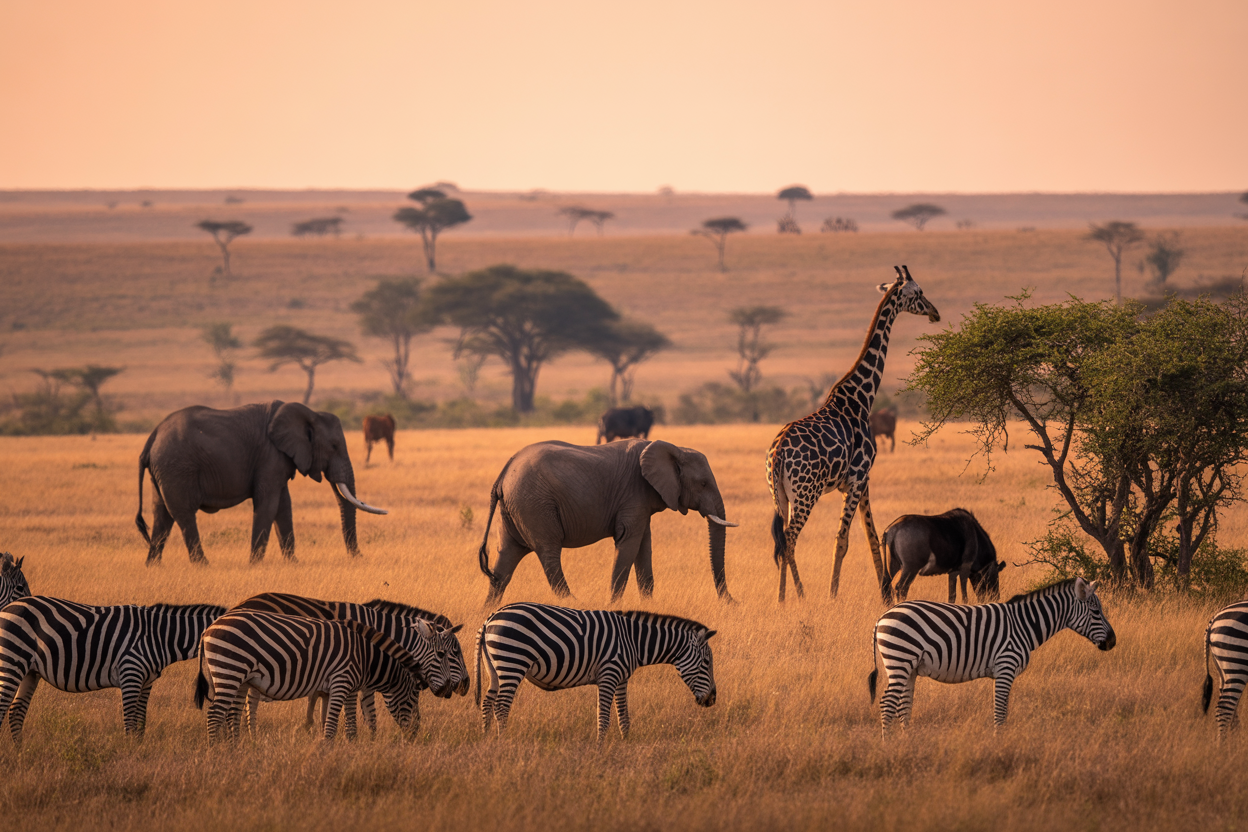
Standing up to 18 feet tall, the Masai giraffe represents one of Kenya’s most recognizable safari icons. These gentle giants roam across the Maasai Mara and Amboseli ecosystems, their distinctive irregular patches creating a stunning mosaic against the African sky. Unlike other giraffe subspecies, Masai giraffes display jagged, vine-like markings that extend down their legs, making them easily identifiable during game drives.
Watch as they gracefully bend their impossibly long necks to browse acacia trees, accessing foliage that remains untouchable to other herbivores. Their 18-inch tongues work like precision tools, stripping leaves while avoiding sharp thorns. During the dry season, these magnificent creatures gather near permanent water sources, creating spectacular photo opportunities as multiple generations drink together.
Masai giraffes live in loose social groups, with females forming nursery herds to protect their young. Calves drop six feet to the ground at birth and stand within hours, a remarkable adaptation to predator-rich environments. Early morning and late afternoon offer the best viewing opportunities when they’re most active and the lighting creates dramatic silhouettes against Kenya’s endless horizons.
Common Zebra – Witness Spectacular Migration Patterns
The plains zebra’s distinctive black and white stripes serve multiple purposes beyond their striking appearance. These patterns confuse predators during attacks and help regulate body temperature in the harsh African sun. Each zebra’s stripe pattern is as unique as human fingerprints, allowing researchers to identify individuals within the massive herds that thunder across Kenya’s grasslands.
During the Great Migration, over 200,000 zebras join wildebeest in their epic journey between the Serengeti and Maasai Mara. They typically lead the migration, using their excellent memories to navigate traditional routes and locate water sources. Their keen eyesight and hearing make them natural sentinels for the entire herd, often alerting other animals to approaching danger.
Zebra family dynamics center around dominant stallions protecting their mares and foals. These family units, called harems, can include up to six mares and their offspring. Bachelor groups of young males travel together until they’re strong enough to challenge established stallions. River crossings during migration provide heart-stopping drama as families stay together despite crocodile threats and strong currents, demonstrating the powerful bonds that hold these striped communities together.
Hippopotamus – Observe River Giants in Their Element
Hippos spend up to 16 hours daily submerged in rivers and water holes, emerging primarily after sunset to graze on surrounding grasslands. These massive mammals, weighing up to 4,000 pounds, are perfectly adapted for aquatic life with eyes, ears, and nostrils positioned on top of their heads, allowing them to remain mostly underwater while staying alert.
Don’t let their seemingly docile appearance fool you – hippos are among Africa’s most dangerous animals. Males establish territories in prime river sections, using their massive jaws and razor-sharp canine teeth to defend against intruders. Their gaping yawn isn’t a sign of tiredness but rather a threatening display showing off teeth that can grow up to 20 inches long.
The Mara River provides exceptional hippo viewing opportunities, especially at popular pools where dozens gather during dry seasons. Listen for their distinctive grunts, snorts, and bellowing calls that echo across the water. Mothers are incredibly protective of their calves, often carrying them on their backs while swimming. These river giants play a crucial ecosystem role, transferring nutrients from land to water through their waste, supporting fish populations and overall river health throughout Kenya’s waterways.
Wildebeest – Experience the Great Migration Phenomenon
Nothing prepares you for witnessing over one million wildebeest moving across Kenya’s landscape in the world’s most spectacular wildlife migration. These antelope, also known as gnu, follow ancient rainfall patterns in an endless loop between Tanzania’s Serengeti and Kenya’s Maasai Mara. The thundering of hooves creates a sound unlike anything else in nature as massive herds stretch to the horizon.
Peak migration viewing occurs between July and October when wildebeest cross the treacherous Mara River. Crocodiles wait patiently in the murky waters while the herds gather courage on the banks. Once the first brave individuals leap in, thousands follow in a desperate rush to reach safety on the opposite side. These crossings represent raw survival drama, with mothers calling for separated calves and predators capitalizing on the chaos.
Wildebeest calving season transforms the southern Serengeti into a nursery from January to March, with synchronized births producing over 400,000 calves within weeks. This timing coincides with fresh grass growth, ensuring mothers have optimal nutrition for milk production. The synchronized births overwhelm predators, giving more calves survival chances. Following the herds during migration reveals the intricate relationships between wildebeest, zebras, and gazelles as they share grazing areas and warning systems across Kenya’s vast wilderness.

Kenya’s wildlife delivers unforgettable moments that stay with you long after you return home. From spotting the legendary Big Five to watching cheetahs sprint across the plains, every encounter tells a story of Africa’s incredible biodiversity. The majestic elephants, powerful lions, graceful giraffes, and vibrant birdlife create a natural theater unlike anywhere else on Earth.
Planning your Kenyan safari around these must-see animals guarantees memories you’ll treasure forever. Research the best parks for your target species, pack your camera, and prepare for the adventure of a lifetime. The animals of Kenya are waiting to share their world with you – all you need to do is take that first step and book your safari today.
A safari is more than a journey through the wild — it’s a journey back to nature, back to wonder, and back to yourself.” 🌿🦁